
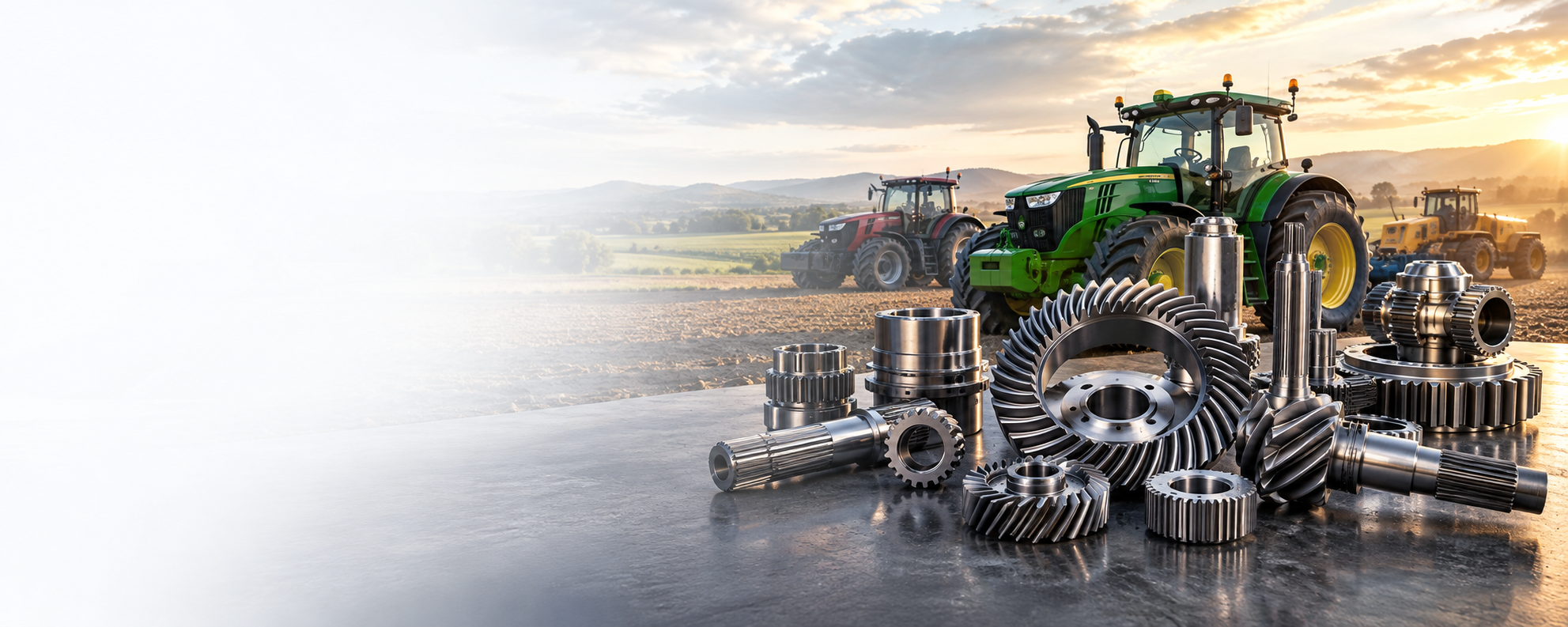
Tractor gear parts are the mechanical components that transfer engine power through the transmission, differential and final drive to the wheels and connected systems. For a B2B buyer, distributor or repair specialist, the important task is not simply finding a gear with a similar shape. The replacement part must match the correct OEM reference, tooth configuration, shaft position and tractor application.
Where tractor gear parts are used
A tractor drivetrain contains several stages of power transfer. The transmission changes speed and torque, the differential allows the drive wheels to rotate at different speeds, and the final drive transfers torque to the axle. Depending on the design, these systems can use spur gears, helical gears, bevel gears and planetary arrangements.
Main tractor gear part families
Speed gears
Speed gears form part of the transmission ratio system. They work with shafts, synchronizing or engagement components and mating gears. When identifying a speed gear, buyers should compare the OEM reference, tooth count, gear position and application instead of relying on outside diameter alone.
Gear shafts
A gear shaft combines rotational support and torque transfer. Some shafts carry separate gears while others include machined gear teeth as part of the shaft. Shaft length, spline profile, bearing surfaces and gear position can all be relevant to compatibility.
Bevel gear sets: crown wheel and pinion
Bevel gear sets change the direction of power flow, commonly around a right angle. In tractor differential and axle systems, the crown wheel and pinion work as a matched pair. Tooth count is especially useful because it describes the ratio between the mating gears and helps distinguish visually similar sets.
Pinion shafts
Pinion shafts carry a smaller driving gear and can be used in transmission, differential or axle assemblies. A correct match may depend on splines, bearing journals, thread dimensions, tooth count and the associated mating gear.
Planetary gears and ring gears
Planetary systems distribute torque through a sun gear, planet gears and a ring gear. They are compact and can provide high torque density, which makes them useful in final-drive and reduction applications. When replacing a planetary component, the entire gear relationship should be checked rather than treating one gear as an isolated item.
Why OEM cross-reference matters
Tractor manufacturers can use the same or related drivetrain components across several machine models. An OEM number is therefore one of the fastest ways to narrow a search. Gearbanks catalog pages combine OEM references with Gearbanks product codes, compatible brands, part names, tooth data and application information so professional buyers can verify a candidate part before requesting a quotation.
What to check before ordering
- OEM number: compare every available reference, including superseded or alternate references where known.
- Brand and model: confirm the tractor or machinery application.
- Part name: distinguish a speed gear, gear shaft, pinion shaft, ring gear or bevel gear set.
- Teeth number: compare the tooth count, especially for mating gear sets.
- Physical configuration: check spline, bore, shaft, bearing and mounting details when technical drawings or samples are available.
- Mating components: for crown wheel and pinion or planetary systems, verify the components that work together.
Using the Gearbanks catalog
Start with the information already available from the machine, old part, service documentation or purchasing record. Search by OEM number when possible. If the OEM number is not available, browse by product group, compatible brand or machine application and compare the technical fields shown on the product detail page.